


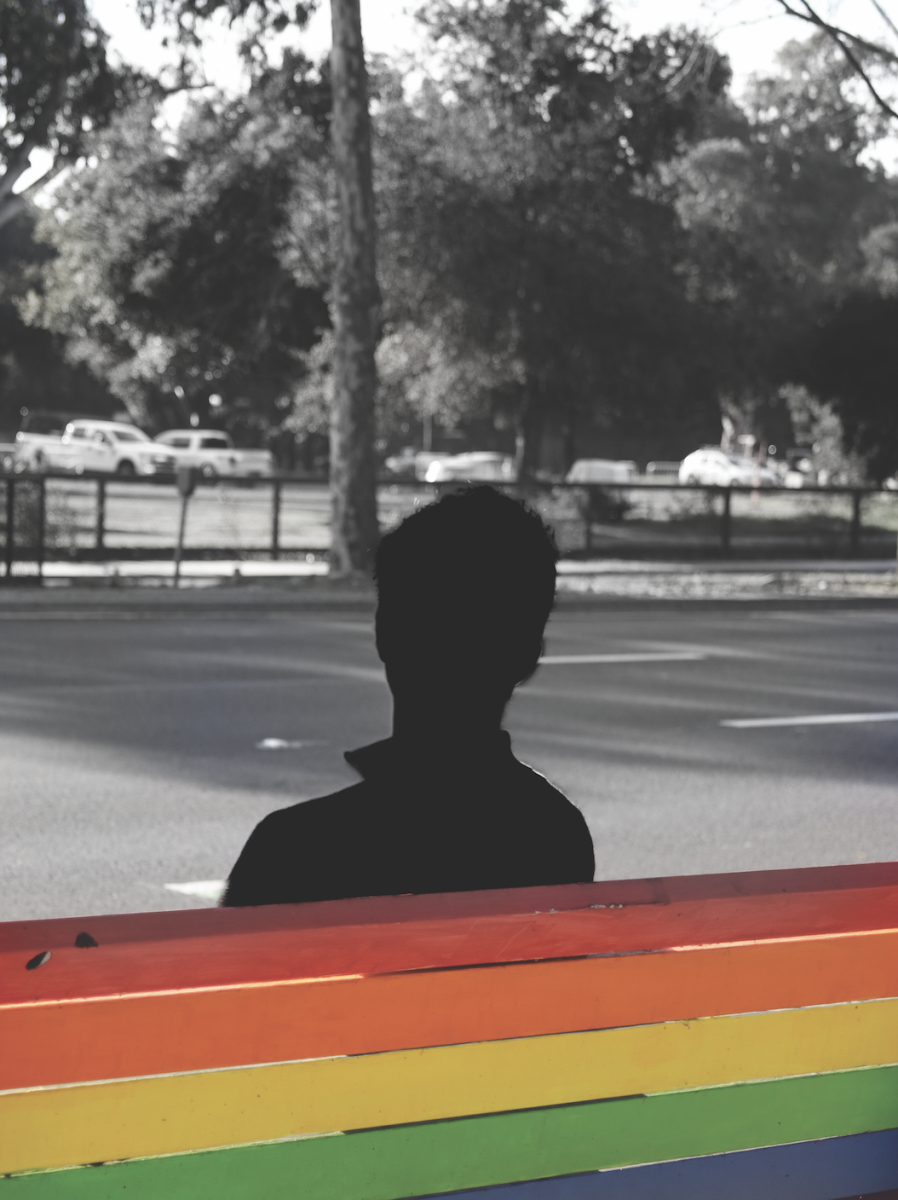
Sports can promise teamwork, respect and belonging, but for many LGBTQ+ athletes, the field can be one of the most isolating places to stand. Behind the cheers and scoreboards, homophobia remains a quiet but persistent presence in competitive athletics.
A study by Outonthefields shows that 80% of participants have witnessed or experienced homophobia in sport, with homophobic language being the most common method.
In 2026, the unfortunate reality is that, with LGBTQ+ athletes feeling more comfortable coming out, they are not being fully supported. According to OutSports, within the men’s “Big Five” sports — NBA, NFL, NHL, MLS, MLB — there are only four active, rostered players who have come out publicly, despite one in five Gen Z adults in the United States identifying as LGBTQ+.
This is not just felt on a professional level. Many athletes at Paly have witnessed, taken part of or experienced some form of homophobia. An anonymous Paly athlete, referred to as Rachel for privacy, who experienced gender-based harassment firsthand, illustrates the emotional impact of homophobia. Even brief comments can leave lasting emotional effects beyond the field.
“There were people from the other team calling me a guy since I have short hair,” Rachel said. “After the game, I was distraught and full of emotions about what happened.”
Despite this, Rachel expressed gratitude for a supportive environment, stating that they feel safe because of their many friends and great coaches. It is important to have a strong, supportive community around you, especially when dealing with something like this.
“My teammates and coaches always defend me,” Rachel said.
Their experience highlights how strong support systems can help counteract harm. This, however, doesn’t underscore the importance of preventing such behavior in the first place.
Homophobia is even present in sports viewed as more masculine, like football. One anonymous football player, referred to as James for privacy, explains how normalized this behavior has become during games.
“It is pretty common to hear people say the f-slur in games because there is nothing anyone can do unless the ref hears them say it,” James said.
Because these remarks often go unpunished, the effects on athletes are often overlooked. James points out that this may be due to football’s hyper-masculine reputation.
“I think the use of homophobic remarks has been normalized in football because it is a masculine sport, so people automatically think all football players are straight,” James said.
According to a 2021 study by Erik Denison, Nick Faulkner, Ruth Jeanes, and Daniel Toole published in the Journal of Science Medicine in Sport, more than half of male team sport athletes reported using homophobic language, and the behavior was linked more to team social norms than to individual hatred.
The harm caused by these comments doesn’t just affect the opposing team, but can also affect their own teammates.
“When people say those things, they don’t know who they are affecting because gay football players usually try to hide it, so for all they know, they could be bringing down one of their own teammates,” James said.
Homophobia on the field can directly harm teammates who feel forced to hide their identities out of fear or exclusion. This can eliminate trust and unity on the field and replaces it with fear and silence.
However, opinions are rarely unanimous, and with big subjects like identity, many can have polarizing opinions. Another Paly athlete, referred to as Mason for privacy, shared how, for him, this tension played out in team environments.
“I’m not trying to be a bad person, but sports are already intense, and the locker room is supposed to feel normal. When someone’s gay, it feels awkward, and people don’t know how to act.” Masonn said.
In many sports, it has become normalized for teammates to use homophobic remarks at each other as a joke. In certain circumstances, this casual acceptance may cause the sports community to ignore homophobia rather than taking action against it. One anonymous athlete, referred to as Pete for privacy, shared how this type of dialogue has become more common.
“Sports are supposed to be about being tough and competitive, and that’s just how I’ve always seen it,” Pete said. “I grew up hearing jokes and stuff, so it’s kind of ingrained. It’s not something I really stop to think about — it’s just how it’s always been.”
Beyond the athletes directly targeted, homophobia in sports also affects teammates and bystanders who witness it. An anonymous witness, referred to as Emma for privacy, describes how hearing homophobic remarks during a game influenced the team’s performance.
“I think in a way it motivated other people who heard to play harder and me because you want to do whatever you can to stand up for your teammate in that moment and sort of prove the person saying offensive things wrong,” Emma said.
Speaking up in times like these to support your teammate is not easy, especially when you are focused on your performance as an athlete.
“I think for me what makes it difficult to speak up in those moments is that I’m too focused on the game to fully comprehend what is happening on the sidelines,” Emma said.
According to an educational intervention study on homophobic language use among youth rugby players, nearly half of the participants reported hearing slurs from teammates, highlighting how common such language can be and how easy it is to tune it out during play.
In competitive environments, athletes are trained to tune out distractions, including comments from parents, spectators, and their opponents.
“The full impact of what is said doesn’t fully hit right in the moment,” Emma said. This allows homophobic language to go unchallenged until later, after the emotional harm has already been done.
Emma also describes the jarring reality of encountering homophobia in youth sports, an experience that caught her off guard in a space meant to be safe and supportive.
“I was definitely surprised to be hearing homophobic comments during a club soccer game,” Emma said.
She emphasized how, at younger levels, sports are meant to prioritize enjoyment, teamwork, and personal growth.
“I think what is so amazing about sports is that they are games that can be played no matter what someone looks like, their sexuality, etc,” Emma said.
When spectators and players bring homophobia into these spaces, it shifts the focus away from athletic ability and turns what should be a supportive environment into a hostile one, which does not belong in sports.
“I believe it is completely unnecessary and unfair to the athletes who are just there to play their sport,” Emma said
In many cases, when homophobic remarks are said, intervention does not happen immediately, due to the intensity of the game.
“No one has intervened at the moment, but there have been actions taken after the fact to have the team take responsibility,” Emma said.
Emma explained that while incidents are rarely addressed at the moment, school officials often respond afterward by placing responsibility on the team as a whole.
“There is no way to tell if these actions are effective when they are going through other people and not directly to the person,” Emma said.
This lack of immediate accountability allows harmful behavior to continue without clear consequences.
Homophobia and gender stereotypes continue to shape how athletes are perceived in high school sports, especially when they participate in activities that challenge traditional expectations. One anonymous boys’ volleyball player, referred to as Leo, shares his experiences confronting these assumptions firsthand.
“I have faced stereotypes before, immediately after I tell people that I play volleyball only because it has a history of being a mostly feminine sport,” Leo said.
These assumptions often lead people to judge his identity rather than his athletic ability. Often, these remarks come from people who don’t fully understand athletics.
“Even though these comments are pretty mean, I don’t really take them to heart because I know that a lot of the people that make these kinds of comments aren’t really athletic because most of the real athletes I’ve met all know that volleyball is actually pretty intense and harder than a lot of the average sports,” Leo said.
His perspective emphasizes the importance of respecting athletes regardless of the sport they play, recognizing the dedication, effort, and skill required to compete at a high level. In fact, boys’ volleyball is one of the fastest-growing high school sports in the country, and that growth is starting to shift perceptions.
“When I tell people that I play volleyball, everyone is mostly surprised, and a lot of them do make stereotypes, but some do think it’s really cool,” Leo said. “Boys’ volleyball is actually one of the fastest-growing high school sports in America, and it’s really starting to show as a ton of my friends are starting to play, and it’s gaining tons of popularity.”
This reflects the gradual change in how boys’ volleyball is being viewed. Still, one misconception is especially frustrating for him.
“I wish people would stop believing that I’m gay just because I play volleyball, and that I don’t play the sport because I’m uncoordinated, I play because I love it, and it’s a really unique and enjoyable team sport,” Leo said.
Harmful stereotypes can overshadow passion, dedication, and love for the game. For Paly cheerleader Carmine Unga, the hardest part of the sport isn’t the performance, but the reactions that come with it. As Paly’s only male cheerleader, Unga is the constant recipient of both wanted and unwanted attention.
“Sometimes I hear people call my name out while cheerleading, in a way that makes it feel like they are making fun of me,” Unga said.
Even when the comments aren’t directly threatening, they can still create an environment where athletes feel judged for simply participating. Instead of engaging with it, Unga explains that they usually try to avoid the negativity.
“I try to keep my distance from all that bad stuff,” Unga said.
Despite this, the support from his teammates has helped create a welcoming environment for Unga.
“I feel pretty safe being me,” Unga said. “My whole team defends me, and I feel like that plays a big role in support.”
He admits that, among this support, there are also times when he feels uncertainty and doubt. In a sport structured around presentation, it can be difficult to gauge an audience’s reaction.
“I never know who supports it, who doesn’t support it,” Unga said.
This support was put to the test when Unga faced online harassment.
“This guy made a post on TikTok about all the cheer teams,” Unga said. “People found out that there was a guy on the team, who was me. Everyone in the comments kept saying something, but my whole team defended me.”
He also emphasizes that people don’t always understand how damaging one comment can be.
“We never know who or what someone’s going through,” Unga said. “One comment might trigger them to quit or have problems with other people.”
Sports are meant to be a place of unity, escape, and self-expression, yet the experience of Paly athletes demonstrates how homophobia continues to disrupt that ideal. From slurs yelled during games to online harassment, harmful language and assumptions have become so normalized that they often go unchallenged. While strong teammates and supportive coaches can help lessen the damage, support alone is not enough. True progress requires accountability and a willingness to challenge longstanding norms that excuse discrimination as part of the game.

