



You cling to the rock, arms burning, muscles aching and heart pounding. Every movement is careful, concise and strategic. For many Paly students, that is what makes rock climbing so enticing and enjoyable.
Rock climbing has become one of the fastest growing outdoor sports, and has attracted people from many different areas; from serious athletes to people who just love the outdoors. Once considered an extreme outdoor activity, rock climbing has evolved into an enjoyable activity for people to test their physical and mental strength.
“I love rock climbing because of how it pushes my limits and brings many different challenges,” senior Giulio Defendi-Cho said.
Within rock climbing, there are different types of ways that climbers can choose to enjoy. One type is bouldering, which is very popular and focuses on short and challenging climbs, but all without a rope. Bouldering is a true test of strength, technique, and the ability for climbers to problem solve during climbs.
“Bouldering is a test of strength because it requires you to be physically strong and you also have to mentally visualize the moves,” Defendi-Cho said. “It requires a lot of practice to get good technique and climbing too often can also cause injury.”
For many Paly athletes and students, rock climbing has become a fun and refreshing alternative to traditional sports. The reason for this appeal is not just for the physical challenge but also for the mental challenge that rock climbing involves. Climbing is a great way for students and athletes to step away from their schoolwork and focus on the outdoors.
Senior Emmett Stewart discovered bouldering in high school and shares how he has found it to be rewarding and one of his favorite activities.
“I got into bouldering from a friend of mine who introduced it to me at the start of freshman year,” Stewart said. “I have been on and off climbing for about four years now and find it an extremely fun activity.”
In addition to being introduced to rock climbing by friends, for some students, like senior Nathan Chang, rock climbing can be introduced through siblings.
“My brother introduced me to bouldering around the middle of July by taking me there once,” Chang said. “I really enjoyed it the first time I went, so I started going more frequently and I have been climbing for about three months now.”
Bouldering and rock climbing can also prepare you for trips outdoors. Defendi-Cho learned rock climbing for the purpose of his trip to Wyoming.
“I did a rock climbing trip this summer in Wyoming for three weeks,” Defendi-Cho said. “So I started climbing this April in order to prepare for it.”
That trip included outdoor rock climbing, which gave Defendi-Cho a real appreciation of how difficult rock climbing is. Outdoor rock climbing presents climbers with unique challenges, which include unpredictable weather and difficult routes.
Although rock climbing might look easy and straight forward, it requires a high level of body control and awareness. One aspect that is tough and difficult for many people are the techniques needed to be a successful climber.
“I was a solid beginner starting better than most, but there was definitely a learning curve when it came to foot mechanics and other specific mechanics that took a while to get a hang of,” Stewart said.
Among the difficult techniques involved for new athletes in rock climbing, the most specific and difficult type of technique is footwork. Many people new to rock climbing rely too much on their upper body strength, but soon realize that balance and technique are just as important.
“My biggest challenge was accepting that I had to learn correct footwork and learn how to shift my body weight in order to progress,” Chang said.
By not learning the correct footwork and how to shift your weight, there can be challenges that prevent the climber from improving. In addition to technique, rock climbing comes with a huge injury risk, as the sport requires you to be suspended in the air and the repetitive gripping motions can cause the fingers and skin to wear down.
“For beginners, it is very common to peel open calluses, causing flappers that take a week to fully heal, though most people just tape over it and keep climbing,” Chang said. “Other injuries in tendons are very common, like tendonitis, especially in the fingers.”
A common assumption for rock climbing is that being strong is equal to being a skilled and exceptional rock climber. But the fact of the matter is that rock climbing is not entirely strength based.
“Being strong doesn’t mean that you can boulder well, although it is an aspect of climbing that can be really beneficial,” Stewart said.
Success in rock climbing often comes down to the climber’s technique and patience. Climbers have to learn how to stay focused and calm under pressure during climbs.
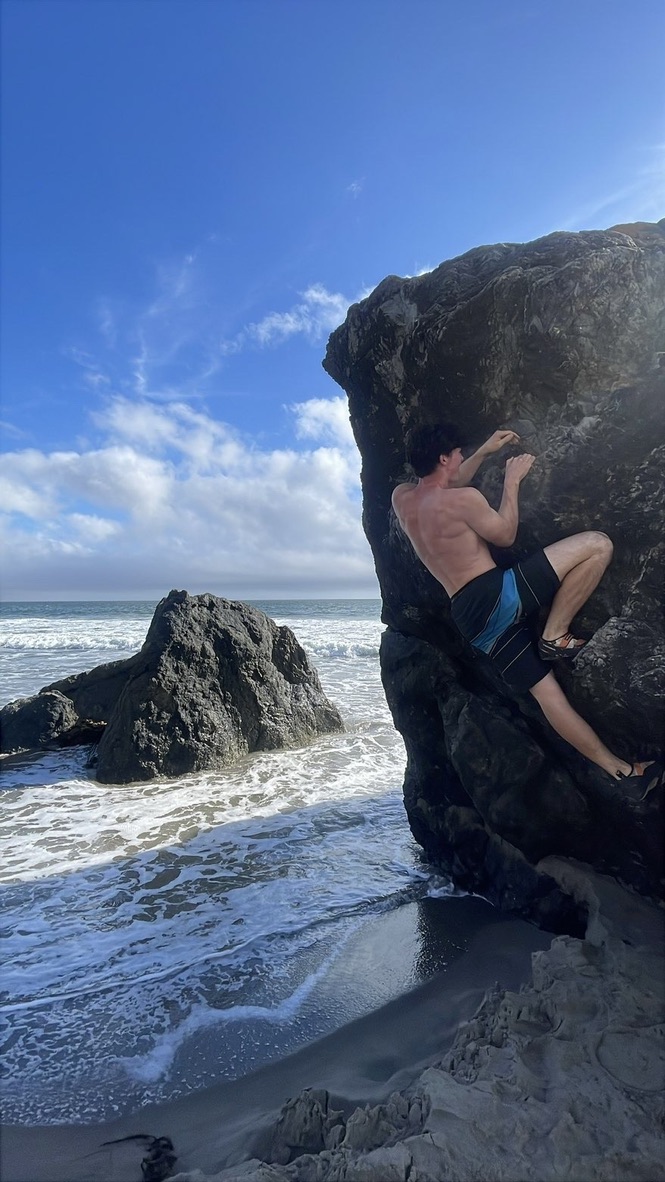
“In reality, there are so many different possibilities of routes to set that require a wide variety of techniques,” Chang said. “While crimp strength, grip strength, and pull strength are very important, there’s a certain point where you will need to learn how to move your feet and shift your body.”
Whether you succeed as a climber or not, climbing has many interesting parts that make it extremely fun to do. Each person finds their own unique aspect that they love about rock climbing.
“The thing I love most about bouldering is the puzzle aspect to it,” Chang said. “Testing different approaches to a route until finally making it.”
In addition to the puzzle aspect of climbing, climbing gives many options and is a very flexible sport.
“I love how casual it is, and whenever I get free time, I can go to the rock climbing gym for as long as I want,” Stewart said. “I love how welcoming the whole community is too.”
Rock climbing allows for climbers to enjoy the small but meaningful improvements that encourage them to keep going and have fun.
“For indoor climbing I enjoy the slow grind that you have to put in and improvement is really slow but very satisfying,” Defendi-Cho said. “For outdoor climbing I love exploring and climbing random stuff.”
The focus and strategy of rock climbing is what makes climbing so rewarding for many students and athletes. As more and more students take on the challenge of rock climbing, it is very clear that the sports mix of problem solving and athletic challenge has found a spot in the worldwide sports community.

