


By lunchtime at Palo Alto High School, the sound of a small rubber ball hitting a net is often enough to draw a crowd. A net appears on the quad, a few students begin playing, and within minutes, backpacks are set aside as a loose circle of spectators and players forms. There’s no planning involved, just a fast-paced game that anyone can join.
Over the past few years, spikeball has grown from a small backyard activity into a popular game played across campuses, parks, and beaches. The game’s simple setup and fast paced style have helped it spread rapidly among students looking for an easy way to stay active and socialize with friends. At Paly, the game has become a regular part of lunch activities and free time.
“Spikeball is fun when it starts as a quick game at lunch, and suddenly a bunch of people are playing,” Paly junior Om Rajan said.
The points aren’t always perfect, and the calls aren’t always serious. But the mood and energy stay light—a large factor that contributes to the popularity of spikeball on Paly campus. It’s a game that’s easy to pick up and easy to enjoy with friends. Spikeball can be played anywhere, whether it’s during lunch, after school, or out in the community.
What makes spikeball unique is how open and flexible it is compared to other sports. There are no official teams, required skill levels, or specific positions you have to play. Anyone can hop in for a few minutes or stay for an entire game. For these reasons, spikeball often brings together people who might not normally connect every day, which creates a shared space that’s built more around fun rather than competition.
“Spikeball brings together different groups,” Rajan said. “Older people, younger people, and different genders. Great way to make friends.”
While spikeball can be played with anyone, playing with friends tends to make the experience more enjoyable. It gives people an easy reason to get outside, spend time together and burn some free time with peers. Some teens feel that spikeball helps them avoid habits such as video games and doomscrolling.
“I have spent more time with friends going out to parks during free time rather than staying home,” Paly junior Aiden Miao said.
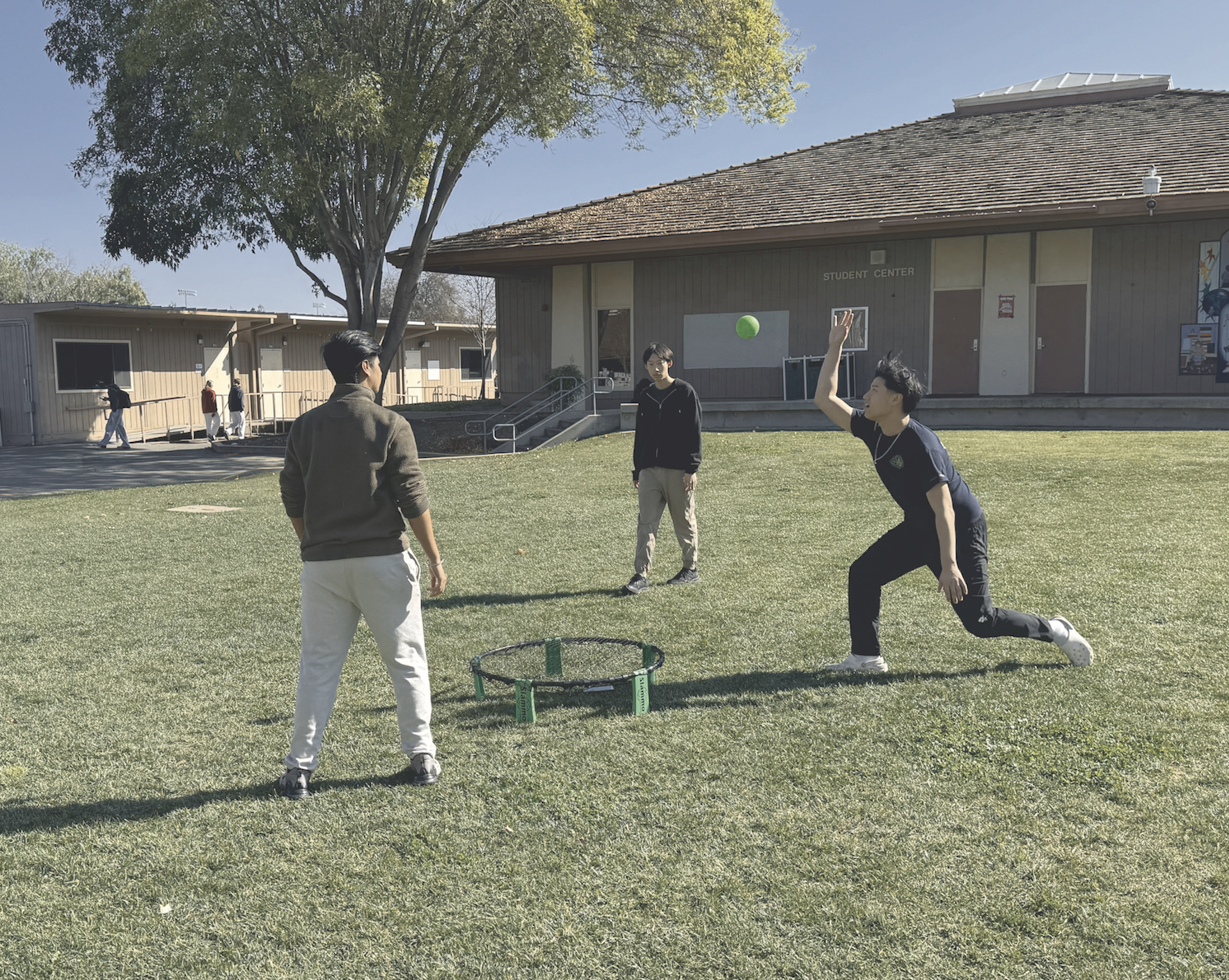
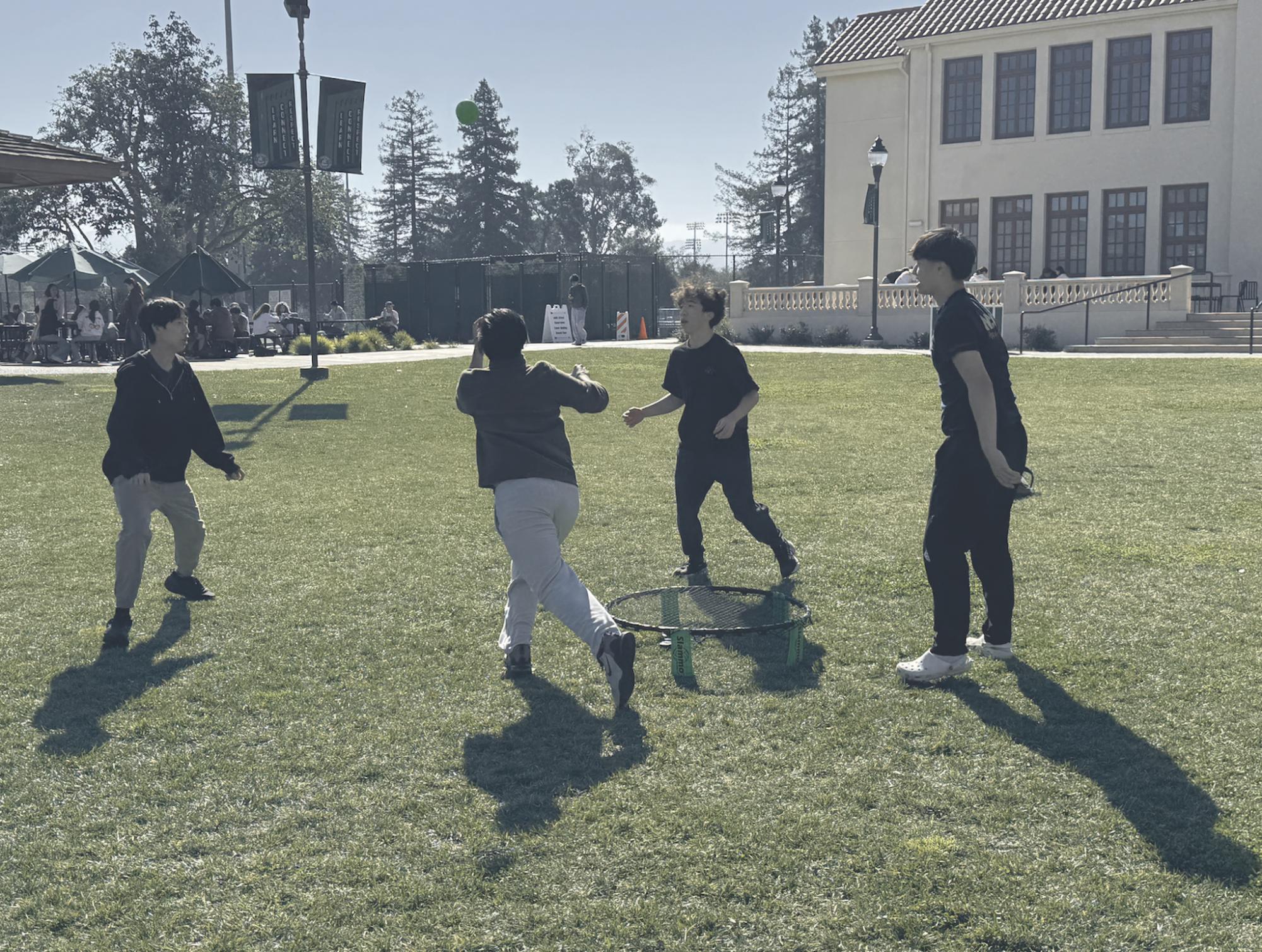
Rather than needing a whole field or gym, spikeball fits naturally into places students already spend time. Lunchtime hangouts, backyards, and local parks often become great game spaces. Because of this, spikeball blends easily into people’s daily routines and allows for ordinary places to be used for fun activities and connecting with friends.
“We play in our backyard, at parks, and most often at the quad,” Rajan said. “[It is] easiest to play when we’re together.”
For Paly senior Malcolm Ginwalla, spikeball beg
an as a way to fill unstructured time during the school day. Its accessibility makes it an easy option for students looking for something to do during lunch, even if they have never played before.
“I first got into spikeball when I was bored during lunch and wanted something to do,” Ginwalla said.
That low barrier to entry is part of what allows spikeball to fit different moods and expectations. Some games stay relaxed, while others naturally become more competitive depending on who is playing and how seriously they want to take it.
“Spikeball can be super competitive or just friendly,” Ginwalla said. “It really just depends on how you’re feeling and the mood your friends are in.”
Like other informal sports on campus, spikeball often connects people who might not otherwise interact. The rotating nature of the game makes it easy for new players to join in.
“Spikeball is the same as a lot of sports in that it brings together people who typically wouldn’t talk to each other,” Ginwalla said.
For Ginwalla, the most memorable parts of spikeball are not tied to competition or score. Instead, they come from the shared atmosphere and freedom to experiment during games.
“I like to have fun while I’m playing, and I enjoy trying new stuff,” Ginwalla said.
Paly junior Samarth Karnam’s experience in spikeball started the same way it did for Ginwalla, where boredom during lunch turns into a daily routine. What stood out to him, though, was how the game felt once competition crept in.
“Spikeball is definitely meant to be a casual hangout,” Karnam said. “Games with my friends sometimes get heated, and that’s honestly when spikeball becomes less fun. I don’t think the makers intended it to be a competitive sport.”
Karnam emphasized that the appeal of spikeball is strongest when it stays relaxed. Unlike others who enjoy the competitive side, he feels the game works best as a way to unwind rather than to win. That casual environment also shaped some of his earliest connections at Paly.
“As freshmen, my friends and I would play spikeball with lots of people we’d never met, including the seniors who sat on the quad with us,” Karnam said. “This way, I was introduced to new people, even older students whom I likely wouldn’t have socialized with otherwise.”
Those interactions left a lasting impression, even if his own interest in the game has started to fade. While some students believe spikeball will continue expanding on campus, Karnam is more uncertain about its future.
“Honestly, I’m not sure if spikeball will continue to grow because a lot of my friends and I are starting to lose interest in it,” Karnam said. “I am not sure if more people will start to join.”
Despite that uncertainty, Karnam said his favorite moments playing spikeball were never tied to scores or wins, but to shared breaks in the action.
“My favorite moment in spikeball is the fun of a good rally,” Karnam said. “Either that or sitting around the net with friends after we’re all tired.”
At Paly, spikeball has grown into more than a passing lunchtime activity. Its simplicity allows students to shape the game around their own energy, whether that means a relaxed rally with friends or a more intense match that lasts the whole break. For many, the appeal lies in how easily it creates moments of connection, even if interest rises and falls over time. As nets continue to pop up around campus, spikeball remains a reflection of student life itself, spontaneous, social and driven by the people who show up to play.
