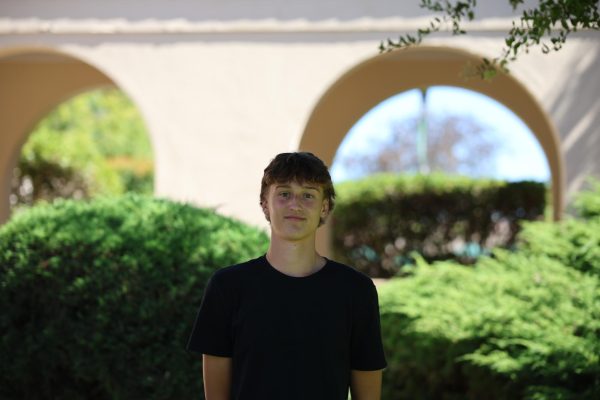



“I’ll never forget the fear I had hiding under the rock. The thunder sounded like a massive explosion right above my head.”
Stuck in this position for 40 minutes with no counselors in sight, junior Annie Kasanin describes her most memorable experience backpacking through Lander, Wyoming.
“The top of a peak surrounded by no peaks is the worst possible place to be in a lightning storm so everyone was pretty freaked out.” Kasanin said.
Despite the fear involved with the sport, many like Kasani leave each trip wanting to come back for more. As soon as school is out for the summer, high school students have the time to seek out transformative, intense experiences. According to the National Library of Medicine, well-designed summer programs can boost youth safety, physical and mental health, social-emotional development, and academic learning. For many, backpacking has been at the forefront of the various summer activities available. Backpacking is defined as traveling or hiking whilst carrying all of your belongings and necessities in a backpack.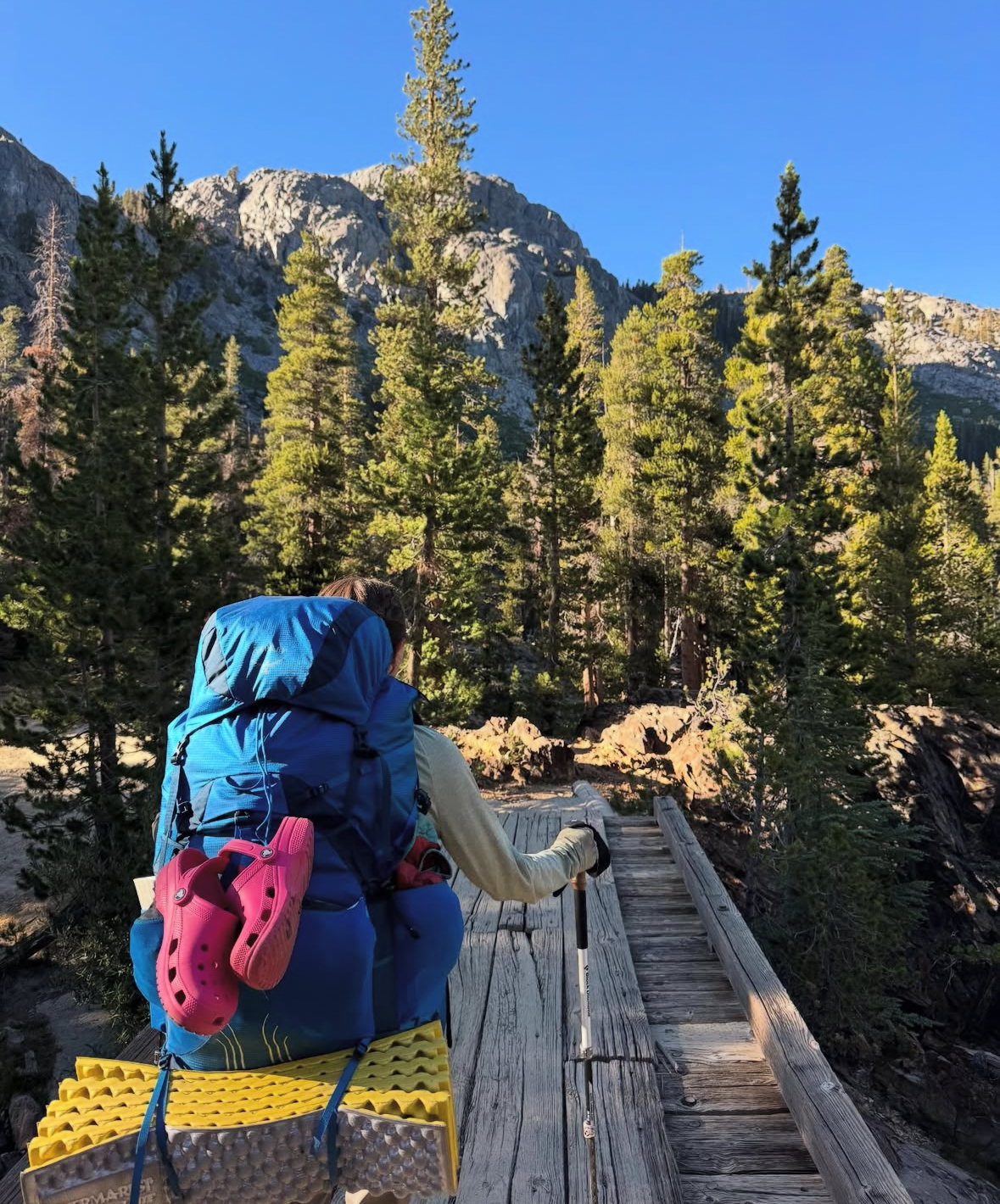
Kasanin, a former cross-country athlete, spent her summer adventuring with NOLS (National outdoor leadership school) — an organization that teaches wilderness skills through immersive backpacking expeditions. While cross country offers a fast-paced and exhilarating environment, backpacking provides Kasanin with the opportunity to slow things down.
“Backpacking allows you to enjoy the nature around you,” Kasanin said. “I’ve learned so many valuable lessons, and I look back at them and mostly remember laughing with my friends.”
This attitude was a valuable tool to get her through some of the many unpredictable moments of the trip. Oftentimes the GPS would malfunction, causing the group to get lost during critical moments of the trip. For example, the group split up one day and planned to meet up back by a pond, due the the GPS malfunctioning, their excursion was extended. “We ended up walking an extra four miles in total, two miles back to where we thought the pond could be,” Kasanin said.
According to travel blog called Dream Big Travel Far, in 2007 6.6 million backpackers nationally which spiked enormously by 2021, with 10.3 million, resulting in a 52 percent increase over 14 years. One factor that could have led to this jump in participation, is the mutual inspiration and community backpacking cultivates between friends and family.
Junior and varsity basketball player Katie McCue recently went backpacking with her family to celebrate her sister’s graduation. Mccue is a dedicated player and is constantly working to improve, even in the off-season. Along with her contributions to the basketball team, she is a member of the club team Fever. Mccue connects the challenges and rewards of both basketball and backpacking.
“[Basketball] gets really hard and tiring, but ultimately I do it so I can enjoy the game,” Mccue said.
Student athletes reflect on their unique experiences with backpacking and how it contributes positively to their mental health.
For junior Owen Mcgraw, a high school sprinter, his backpacking trip was based in Twain Harte, California. Mcgraw originally didn’t have an interest in backpacking, but was introduced to it by a friend.
“My friend Mack drew me to go on this backpacking trip because it was a part of visiting Twain Harte in the summer and I thought it would be a new experience,” Mcgraw said.
Backpacking, Mcgraw quickly discovered was very different from sprinting.
“It’s very long and aerobic unlike sprinting, I don’t think it necessarily stretched my mental or physical strength because the hike wasn’t very far.”
For Mcgraw, the trip wasn’t about the intensity, but rather experiencing the outdoors at his own pace in a way his sport can’t offer.
One element that backpacking provides for many is a much needed escape from social media. Junior Clement Romanski, a member of the Twain Harte trip, highlighted this as a positive of the experience.
“Hiking brought everyone closer as time went on, especially with the absence of technology,” Romanski said.
According to National Library of Medicine multiple studies show that time in nature reduces stress levels, lowers anxiety symptoms, and can improve mood regulation. There are many theories, such as biophilia hypothesis- put forward to provide reasoning surrounding the positive effect of nature on youth mental health. This theory, first introduced by biologist Edward O, highlights the idea that humans are drawn to nature due to evolutionary bonds and our ancestors’ dependence on natural environments for survival. Programs such as NOLS, which take place completely outdoors tap into this idea, and require one’s daily activities to revolve entirely around nature. Keeping this in mind, Kasanin envisions additional opportunities outside of NOLS for her future backpacking experiences.
‘It was such a unique experience that I can’t really relive. I would definitely go backpacking with friends and family, maybe just not another NOLS course,” Kasanin said.
As reflected in all of these experiences, backpacking trips are a good break from the real world and can improve people’s mental wellbeing, they also have the power to build great relationships through the long periods of time spent walking.