

Sports achievements in high school may be defined by goals scored, games won or minutes played. While it’s great to celebrate those stats, stats aren’t all there is to it. It doesn’t speak to games spent sitting on the bench or at the end of the lineup while a player silently works hard hoping to one day see the results they expect manifest. It doesn’t speak to those quiet nights when an athlete questions their place or ability in their sport. The quiet battle to earn a place at the top is often overlooked.
For athletes at Palo Alto high school, this is the hidden face of sports. Not everyone arrives as a star. Some athletes begin the season at the fringes, waiting their turn while others shine. These experiences can allow many athletes at Paly to develop character and reveal an individual’s ability to cope with challenging situations.
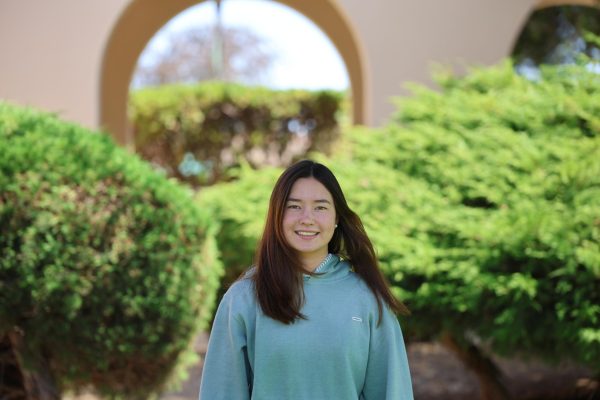
Sophomore Maya Rajgopal was a lower doubles player for the girls varsity tennis team the previous year as a freshman. Being on the varsity team was an accomplishment, but Rajgopal knew she was still at the bottom of the ladder. Being the lower doubles player meant she would be playing tough opponents with no room for errors, despite hard work with no visible gains.
Early in the season, the team played opponents that were significantly stronger. Losses were common, specifically because of miscommunication with her doubles partner.
“You put in a lot of effort, but they [opposing team] still beat you,” Rajgopal said. “That can hurt your confidence.”
Being at the bottom of a lineup creates a specific kind of mental pressure. Every mistake feels a lot bigger than it actually is. An athlete is part of the team, but always aware of the distance between where they are and where they want to be.
“You still feel it,” Rajgopal said. “You’re playing the lowest position on the team.”
What made Rajgopal’s struggle so hard to endure was the fact that it was so quiet. There was no defining moment where she was sitting out entirely or where she was told she was not good enough. Instead, it was the quiet accumulation of small defeats. When she saw her teammates scoring higher in the lineup, the announcer’s voice calling out the scores and the knowledge that she is not moving up in the lineup, it created an inner tension for her.
It was not until Rajgopal recognized that if she was going to tie her self-worth to her performance and her performance to external factors outside her control, she would never feel like she was making progress.
“I had to stop making my spot on the team personal and just focus on how I can get better,” Rajgopal said.
The only part of her game she could control was her attitude, her reaction to her frustrations and her ability to move forward to the next point no matter what had happened in the last. This was the beginning of her shift from progress being about proving herself to others to progress being about regaining control.
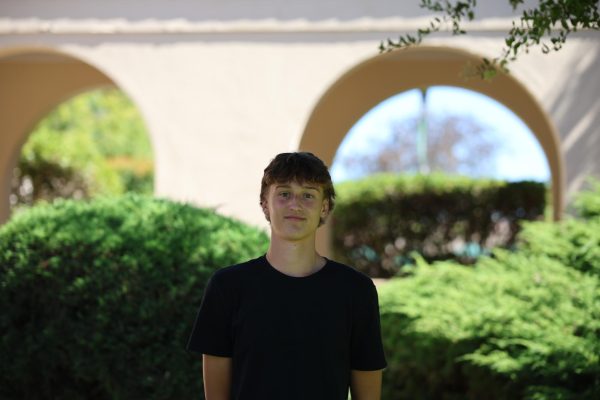
On the soccer field, senior Cole Baker was navigating a different version of that same mental struggle.
Last season, Baker played on the boys varsity soccer team, a team that consisted of a lot of key seniors. Baker had a lot of experienced defenders ahead of him on the team, resulting in not getting the playing time he wanted. The lack of game action began to affect Baker’s play and his attitude toward the sport.
“We had a lot of depth and I wasn’t playing as well as I could,” Baker said. “I didn’t really want to be there a lot of the time because of my performance. And the lack of playing time made practices start to feel like a hassle and made my mistakes linger longer. ”
Other athletes across campus faced similar internal battles.
For Senior Kacey Washington, this struggle manifested itself on the football field. Last season, Washington frequently found himself sitting on the bench, trying to pick up as much knowledge as he could, waiting for his opportunity to prove himself. Being a benchwarmer caused Washington to doubt himself, both as a football player and as a person.
Instead of letting this doubt consume him, Washington decided to look at this year’s season as a learning experience.
“When you don’t play as much, it’s kind of hard on you,” Washington said. “It makes you question, do I love this sport? Am I good enough to be playing?”
On the field hockey team, Roni Horovitz was challenged to a quieter—but still demanding task. She was a late starter to the sport and her first few years were about learning the ropes and getting accustomed to a very competitive atmosphere. Once she made it to varsity, everything was different. The practices were harder and she was expected to do better. The focus was no longer on enjoying the game but rather successfully making it through each and every practice.
“The hardest part was finding the energy to come to practice after a really long day of school, when that’s the last thing you want to do,” Horovitz said.
Even though all of these athletes are playing different sports and have their own unique circumstances, they wondered if their rough patch was where their athletic journey would end.
For many athletes, this is the hardest point. Being in a place where they don’t know if effort will ever be rewarded. Many step away. Others stay, but mentally drift. And a few decide to lean into the discomfort.
Rajgopal’s shift began internally. Tennis, especially singles, leaves no room to hide from your thoughts. Every point belongs to you. There is no teammate to absorb pressure, no play to hide behind. To move forward, she had to change the way she spoke to herself.
Instead of replaying mistakes, she learned to reset after each point.
“Even really good players lose a lot of points,” Rajgopal said. “You just have to move on.”
Her offseason reflected that mindset. While tennis remained her main sport, Rajgopal stayed active through basketball and softball, keeping herself in shape year round. On weekends, she practiced consistently with her doubles partner and private coach. Improvement felt quiet and uncertain, but she continued anyway.
Baker’s reset came through distance. Over the summer, he stepped away from soccer entirely. The break was not about quitting, but about reflection. Without the constant pressure of the season, he was forced to confront why he played in the first place.
“I realized it was my senior season and I wanted to play because I realized I would never get this opportunity in my life ever again,” Baker said.
That realization changed how he returned to the sport. When he came back, the team looked different. Graduations had reshaped the roster and suddenly, Baker was needed in ways he hadn’t been before.
“Going into this season, the team is relying more on me,” Baker said. “It changes your mindset.”
Responsibility has a way of sharpening focus. When a team depends on you, there is no room to hide. Leadership becomes unavoidable.
Similar shifts were happening across other teams at Paly.
For Washington, the offseason became his turning point. He joined a seven-on-seven team and spent months getting reps, working on in-game skills and building confidence. Of all the things that Washington has worked on, there has been one thing that stood out above all the rest: the over the shoulder catch. By the time the season began, his mindset had changed and his confidence allowed him to find opportunities.
“As long as you can show growth, coaches will see it,” Washington said. “When you get opportunities, you just have to show what you can become.”
For Horowitz, progress was a slow process. Each season, she learned more about the game and was more comfortable out there. Being assisted by upperclassmen was a big factor in helping her transition into varsity.
“I feel like I’ve just been improving each season,” Horovitz said. “Having upperclassmen there to help made a really big difference.”
For Rajgopal, the moment when progress became undeniable arrived quietly. During an early-season practice, the varsity team was split into two groups, something she had experienced many times before. Last year, she always knew where she would be placed. This year was different.
She found herself competing alongside players she once viewed as far ahead of her. The drills felt different. The gap she once felt had narrowed.
“That day kind of showed me that all the work I have been putting in was finally paying off, ” Rajgopal said.
Baker’s moment came in competition, specifically a match against Gunn High School in which he felt a shift.
“I was surprised by how well I played,” Baker said. “I felt like I was able to play the game in a way I have never played it before.”
With that confidence came leadership. Baker became more vocal and more accountable— eventually earning a captain role. What once felt like pressure became purpose.
Around campus, other athletes reached similar moments.
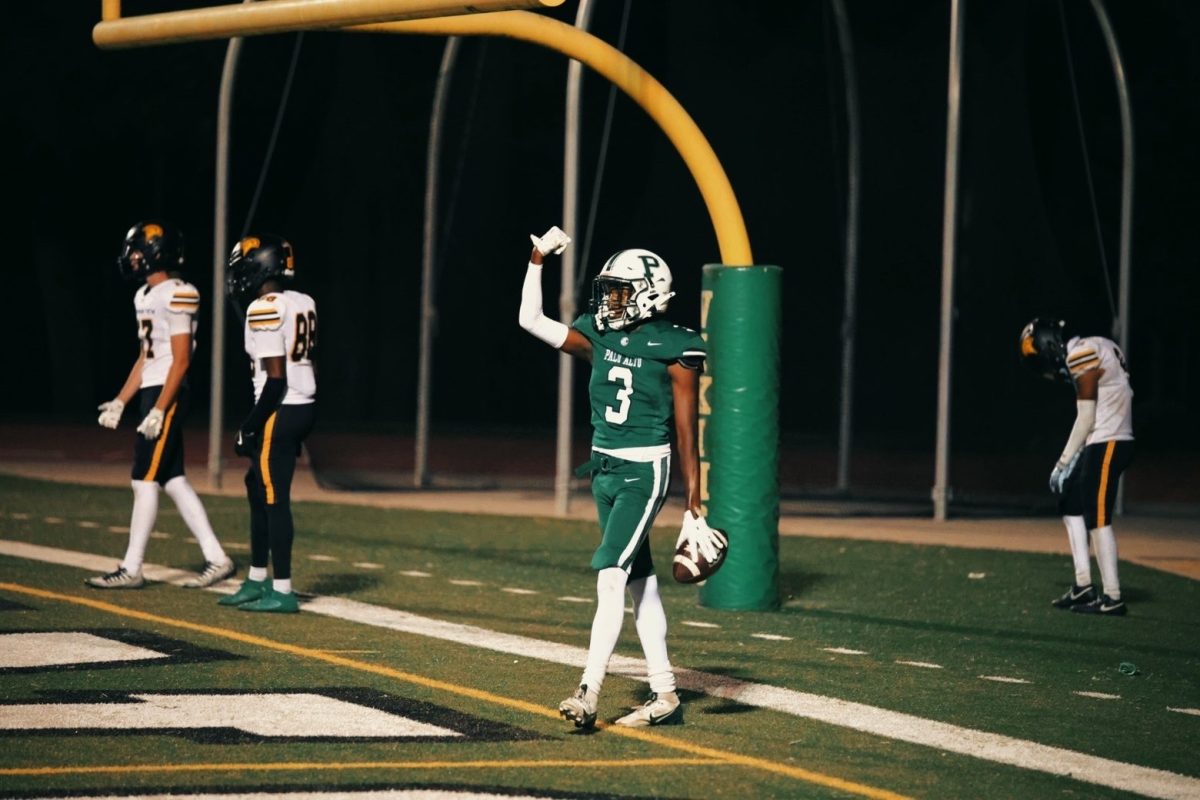
For Washington, that moment came this year during the home opening game against Mountain View. After spending his previous season watching from the sideline, Washington translated all his work from this past summer to complete an over the shoulder catch deep in the endzone, resulting in the whole crowd chanting his name. Making a key catch in a tight game, specifically an over-the-shoulder catch that he has been working on all offseason, confirmed that the work he put in was finally paying off.
“The feeling of that catch is an unforgettable feeling that I will never forget,” Washington said. “It felt like all of my hard work had finally payed off.”
For Horovitz, the major change was not in terms of a single play but in terms of performance. Later on, her performance improved and she felt as if she belonged in the field.
“I just kept going because it was my final season,” Horovitz said. “My teammates were always there telling me it was okay and that I should keep going.”
When the tennis lineup was released and Rajgopal saw her name listed under singles, the recognition felt surreal. As a sophomore, placed ahead of older teammates, it confirmed that quiet effort had finally become visible.
For Baker, the transformation felt just as striking. Reflecting on the previous season, he knows how unexpected his current role would have seemed.
“If you told me last season I’d be captain, I would’ve thought that was crazy,” Baker said.
The same was true for Horovitz, Washington and others who are still writing their stories. It was just as important for these players to get to a place where the time they were spending on the field correlated with how they felt about themselves on the field.
These stories are not really stories of natural talent or success, but stories of staying through the hard, uncertain periods, of learning how to stay with the uncomfortable and of staying when the easy thing to do would be to leave.
These athletes at Paly high school prove that being overlooked can be only temporary if you put your mind to it. Growth is quiet, but when it happens, everything is different. Often, the biggest victories begin before anyone is paying any attention.
What gives these moments significance is not the end result, but the journey that leads up to it. Not one of these players describe that the defining moment in their athletic careers was easy. Instead, it was the repetition of showing up to practice even when motivation levels were low, competing even when it felt like nothing was being accomplished and learning to separate yourself from competitors. It was a journey where improvement was slow, slow enough that it was almost impossible to notice. It was only in moments of reflection that it became clear how far an athlete had come. The confidence they eventually achieved was not from winning but from learning.
In a way, these stories can be seen as the majority for what it is like to be a high school athlete. Most will never have their name announced over a loadspeaker or have their achievements tracked in statistics that will last long after the season is over. What will remain is the work ethic that was developed during the difficult times. For Rajgopal, Baker, Washington and Horovitz, success was not achieved overnight, but by staying persistent and moving to the front of the lineup. Their stories illustrate that growth is not always easy to spot. In fact, it is often quiet and unheard long before it ever becomes obvious to anyone else.