



The 2025-2026 March Madness season once again proved why it remains one of the most exciting events in sports. This year’s women’s NCAA tournament showed off from start to finish. Between sold-out crowds, dominant performances, and devastating losses, the 2026 tournament continued to show just how much women’s college basketball has grown both in popularity and competition. From the opening weekend, the tournament felt unpredictable. Higher-seeded teams were tested earlier; several lower-seeded teams pushed their way into the spotlight and redefined their role in the bracket. Unlike past years, where a few dominant teams separated themselves from the rest, this season felt far more balanced, with multiple teams looking capable of making a championship run.
While March Madness is usually known for generational runs and constant upsets, this year’s bracket was far more dominated by the nation’s top programs. UCLA, South Carolina, and Texas all returned to the Final Four. South Carolina opened the tournament with a 69-point win, while several first-round games ended in blowouts by over 20 points. At the same time, the tournament still delivered the intensity for which March Madness is known, packed arenas, emotional finishes, and performances that kept national attention on the women’s game throughout the month.
Led by dominant center Luaren Betts, UCLA captured the program’s first NCAA Division I championship since 1978, after one of the strongest tournament runs in the country. The Bruins relied on their size, defense, and overall depth throughout March, consistently finding ways to control games on both ends of the floor. Betts became the centerpiece of that championship run, averaging 16.4 points and 8.2 rebounds while shooting nearly 58% from the field this season. By the end of the tournament, Betts had established herself as one of the top post players in the nation, placing fourth in this year’s WNBA draft.
After leading UConn to a national championship last season, Azzi Fudd entered this year’s tournament with high expectations as one of the team’s veteran leaders. Years of injuries slowed parts of her development, but Fudd returned healthy and played some of the best basketball of her career this season, averaging nearly 18 points per game while shooting over 44% from three-point range. UConn once again looked like a serious match to play throughout March and came close to returning to the championship game, but the Huskies’ run ended in the Final Four after an upset loss to South Carolina. While Fudd remained an important part of UConn’s offense throughout the season and later became the No.1 pick in the WNBA Draft, she struggled to find her consistency during parts of the NCAA tournament, especially in the later rounds, where the Huskies needed strong protection from their experienced players.
Additionally, UConn sophomore Sarah Strong
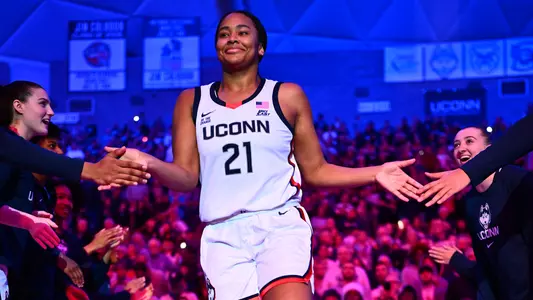
continued her rise into national attention throughout March. Strong averaged 18.5 points and 7.6 rebounds while shooting over 60% from the field this season, numbers that helped make her one of the favorites for National Player of the Year. What separated Strong from most players was her versatility. She could score inside, defend multiple positions, and facilitate the Huskies’ offense, giving UConn one of the most complete players left in the tournament.
Beyond the championship itself, this year’s tournament highlighted how much talent now exists across women’s college basketball. Players like Azzi Fudd, Lauren Betts, Sarah Strong, and Hannah Hidalgh continued proving the game is deeper than ever, while stats like JuJu Watkins and Flau’jaue Johnson brought major national attention both on and off the court. The combination of NIL opportunities, social media growth, and increased television coverage has turned many of the sport’s biggest players into national celebrities, helping women’s basketball continue to grow at a rapid pace.